A closer look
The pleasure of searching.
Scanning a grid, recognising a word, settling into a soundtrack: research helps describe what happens in these moments. Four perspectives inform our reading of Seekzl’s design.
Eye tracking · 13 participants
Explore. Then recognise.
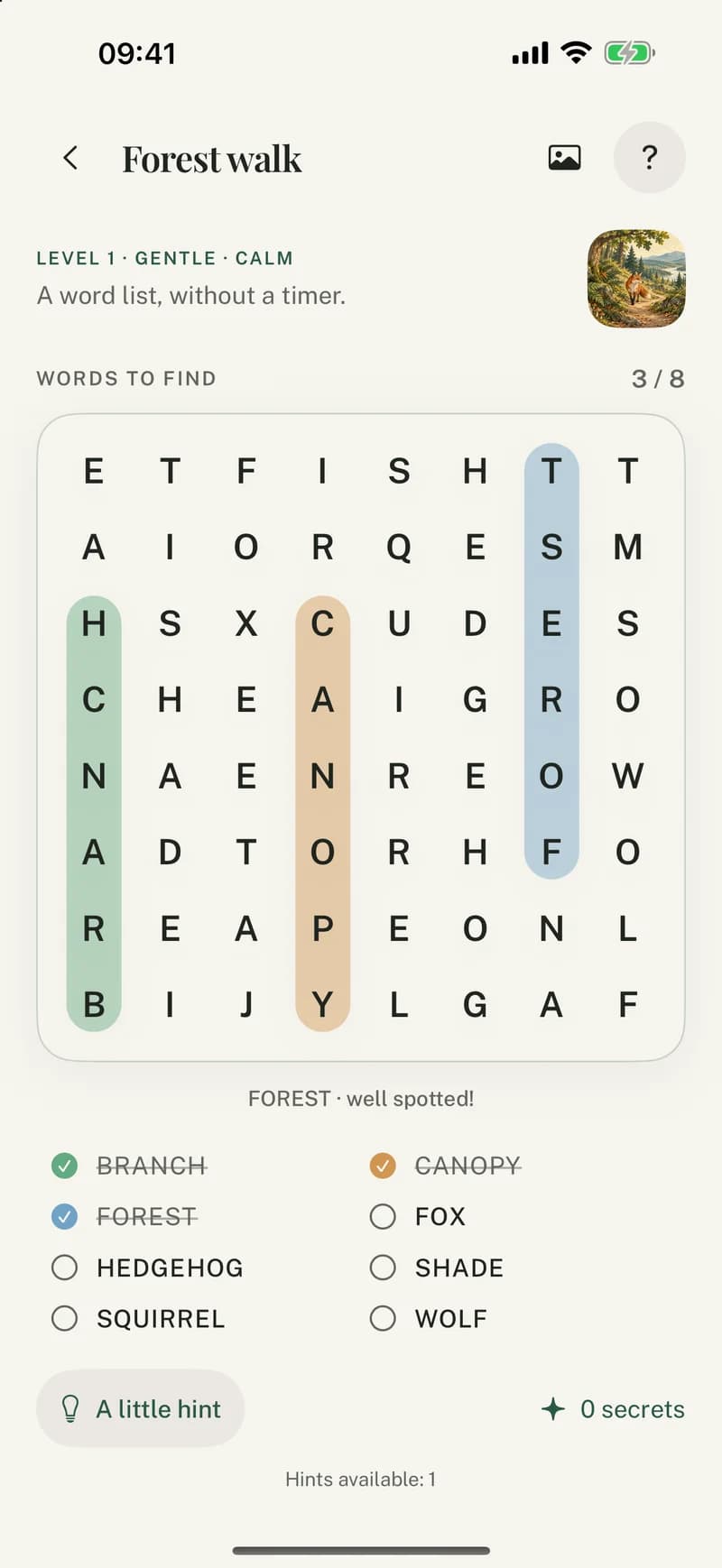
Beelders (2023) studied word searches in three languages. Participants used strategies ranging from orderly scanning to less structured exploration, partly linked to language familiarity. Most eye-movement measures, however, did not differ significantly with fluency. This small pilot describes how people search; it does not show that puzzles improve language skills. [1]
In Seekzl, that means room to explore a grid at your own pace, in a language you know.
Visual attention · explanatory model
Give the eye something to follow.
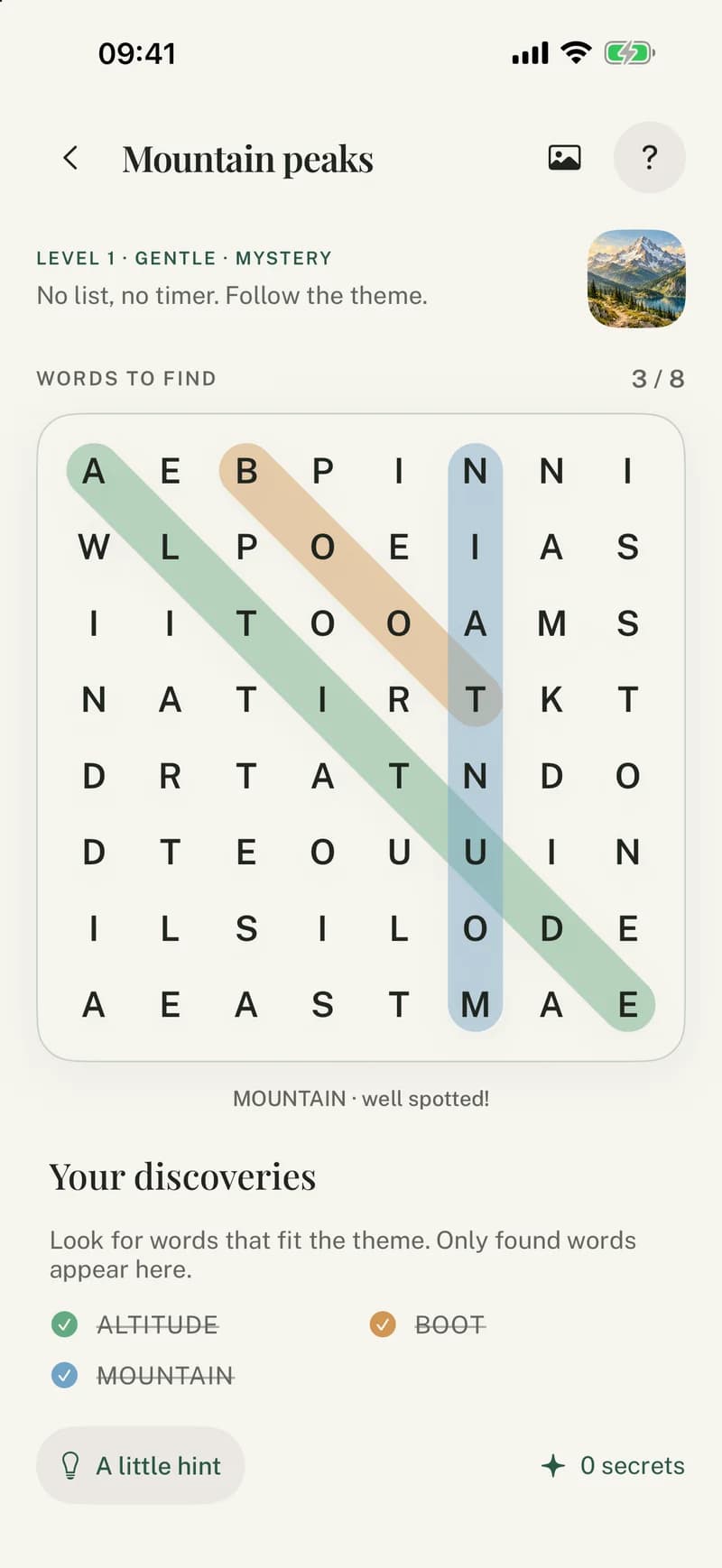
Wolfe’s Guided Search 6.0 model (2021) explains how attention selects elements using what we are looking for, visual features and previous experience. We do not recognise everything at once. This is a model of visual search, not an experiment showing a benefit from playing. [3]
We connect this to readable letters and highlights that keep found words visible.
Preferred music · 40 students
An atmosphere you choose.
Kiss and Linnell (2021) compared silence with participants’ preferred music during a simple vigilance task. The 40 students reported less mind-wandering and more task focus with music. Overall reaction time and its variability did not improve significantly. Feeling more engaged does not necessarily mean performing better. [2]
Our design response: eight atmospheres to listen to and choose for enjoyment, without a performance promise.
Systematic review · 154 experiments
Leave room for silence.
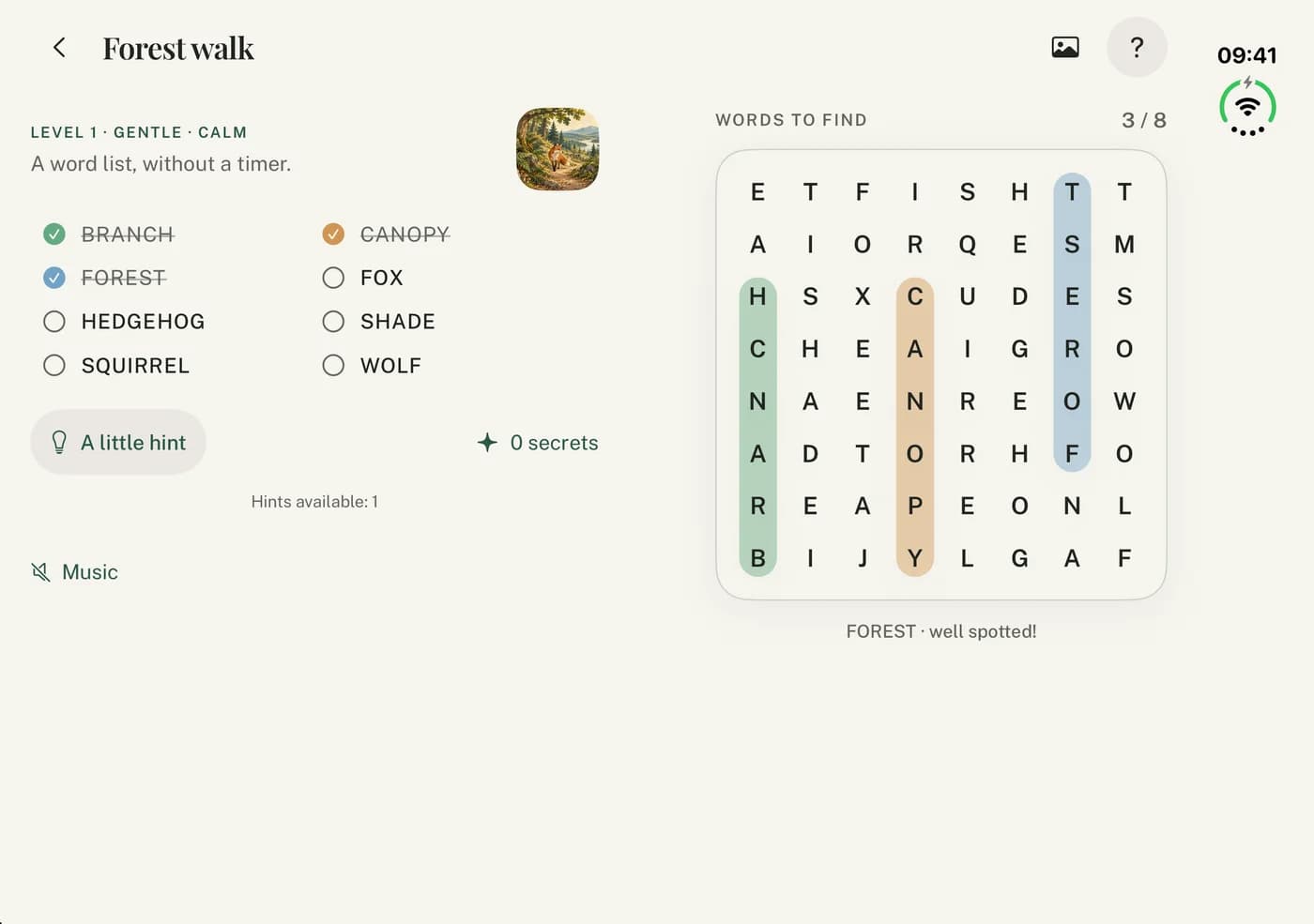
Cheah and colleagues (2022) reviewed 95 articles covering 154 experiments. Effects depended on the task, music and listener; many comparisons showed no effect. Memory and language tasks were generally hindered, with lyrics tending to interfere more than instrumental music. Music is not a universal aid to concentration. [4]
You keep control of the sound. Playing in silence is just as valid a choice.
These connections are our interpretation of the design. None of these publications tested Seekzl, its music or long-term use. They establish no memory improvement, clinical stress reduction or other cognitive or health benefit from the app.