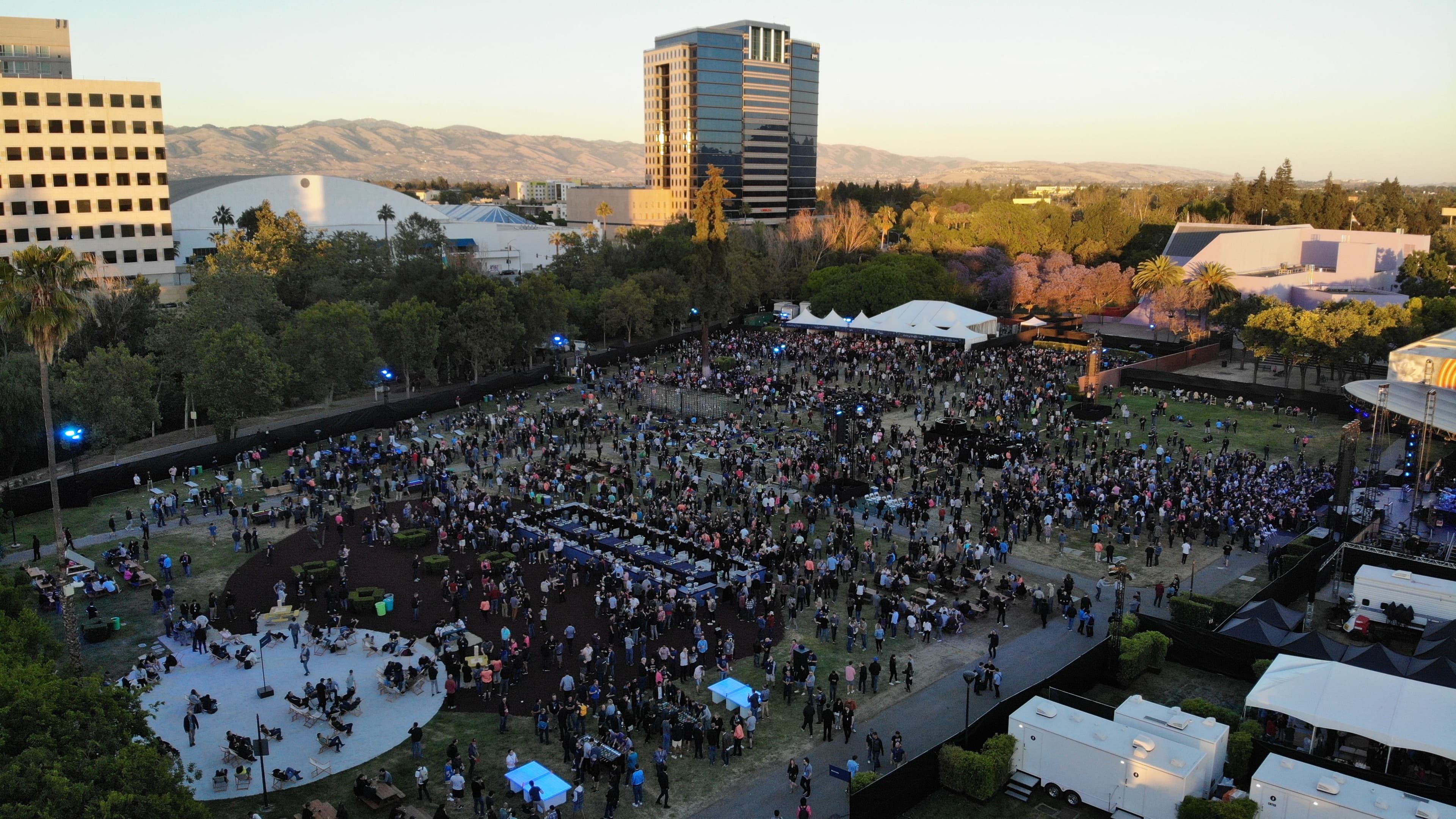
There's the official WWDC — keynotes, sessions, labs. And then there's everything else: community events, developer dinners, encounters that change a trajectory. That's often where the real substance is.
The WWDC nobody sees
In 2012, during my second WWDC, I met Yann in the hallway of Moscone West. Michel (Sutter) — whom I affectionately call the "dino": at Apple since before I was born, retired now, and one of those people who knows absolutely everyone in the French ecosystem, always fond of his annecdotes — introduced us. Yann had founded AppsFire — originally a mobile app discovery startup, which quickly pivoted to ad tech after another developer made a scandal out of Apple killing his app — for breaking the rules. I won't get into the details — I have a very clear opinion on the matter, and it firmly sides with Apple.
We talked for several minutes. Brilliant guy.
None of that of course was in the official program.
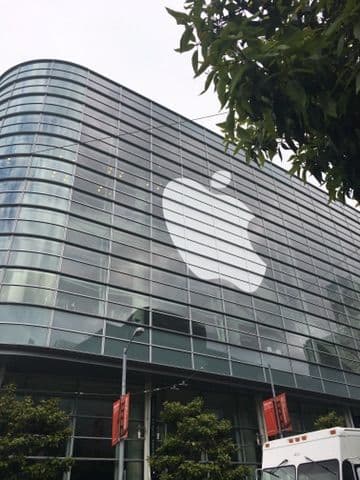
Nowadays, Yann's a friend, a mentor, Chairman of :probabl, a company I've invested in. That relationship probably wouldn't exist without WWDC — or more precisely, without what happens around WWDC.
That's what this article is about.
The official program is the visible part of the iceberg
In the first article, I described the formal structure of WWDC: keynote on Monday, State of the Union, sessions, labs. Three days in-person for selected developers — mixer at 1 Infinite Loop on Sunday, keynote on Monday, labs on Tuesday. That's the program Apple publishes. That's what the press covers.
But since the late 2000s, and accelerating since the conference opened to everyone online, a parallel community ecosystem has built up around WWDC of remarkable depth.
Events organized by developers, for developers. Some discreet, some that have become institutions in their own right. All driven by the same energy: people who build things for Apple, finding themselves in the same place at the same moment, wanting to talk to each other.
Side events: an ecosystem in its own right
During WWDC week, Cupertino — and before that San José, and before that San Francisco — transforms.
In San Francisco, it was a different intensity altogether: the city was already the world capital of tech startups, and you felt it. Parties every night, organized by companies with their HQ right there — _Slack, Stripe, Realm, Big Nerd Ranch._Everyone threw their own event, their own open bar, their own moment to recruit or simply exist in the ecosystem.
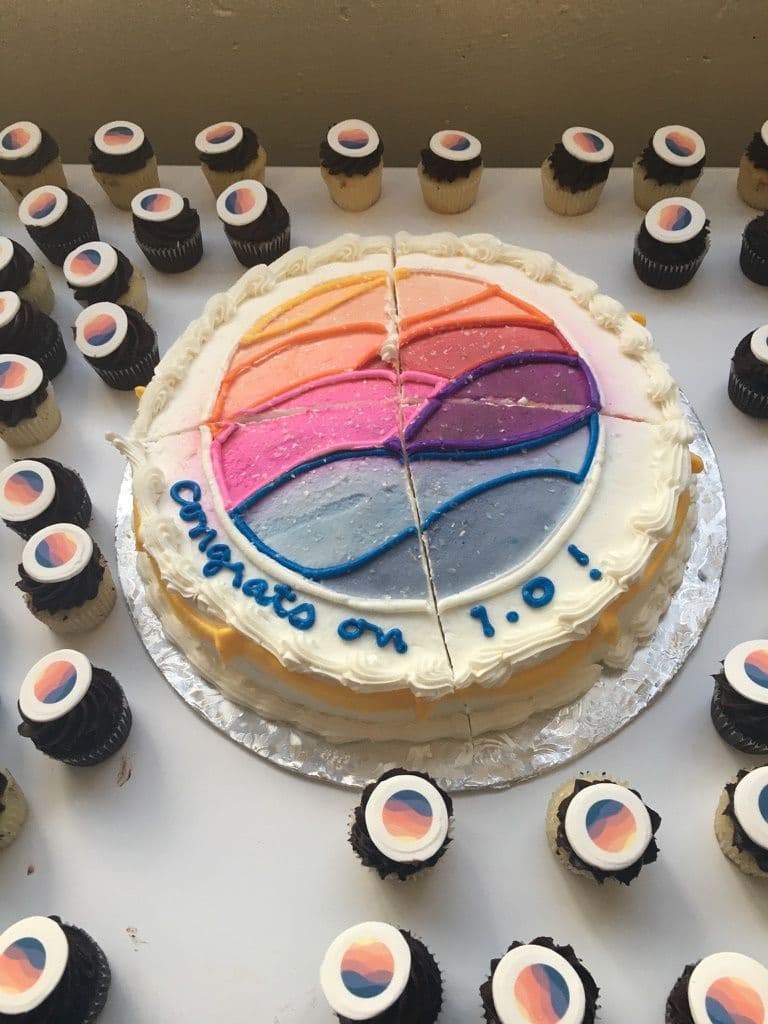
San José was different. The big names in that area — Adobe, Cisco, eBay, PayPal — are mature companies. Not exactly the type to throw open bars for iOS developers. The atmosphere was calmer, more centered on the Apple community itself. The unofficial HQs: the Paper Plane, Tiki Pete...
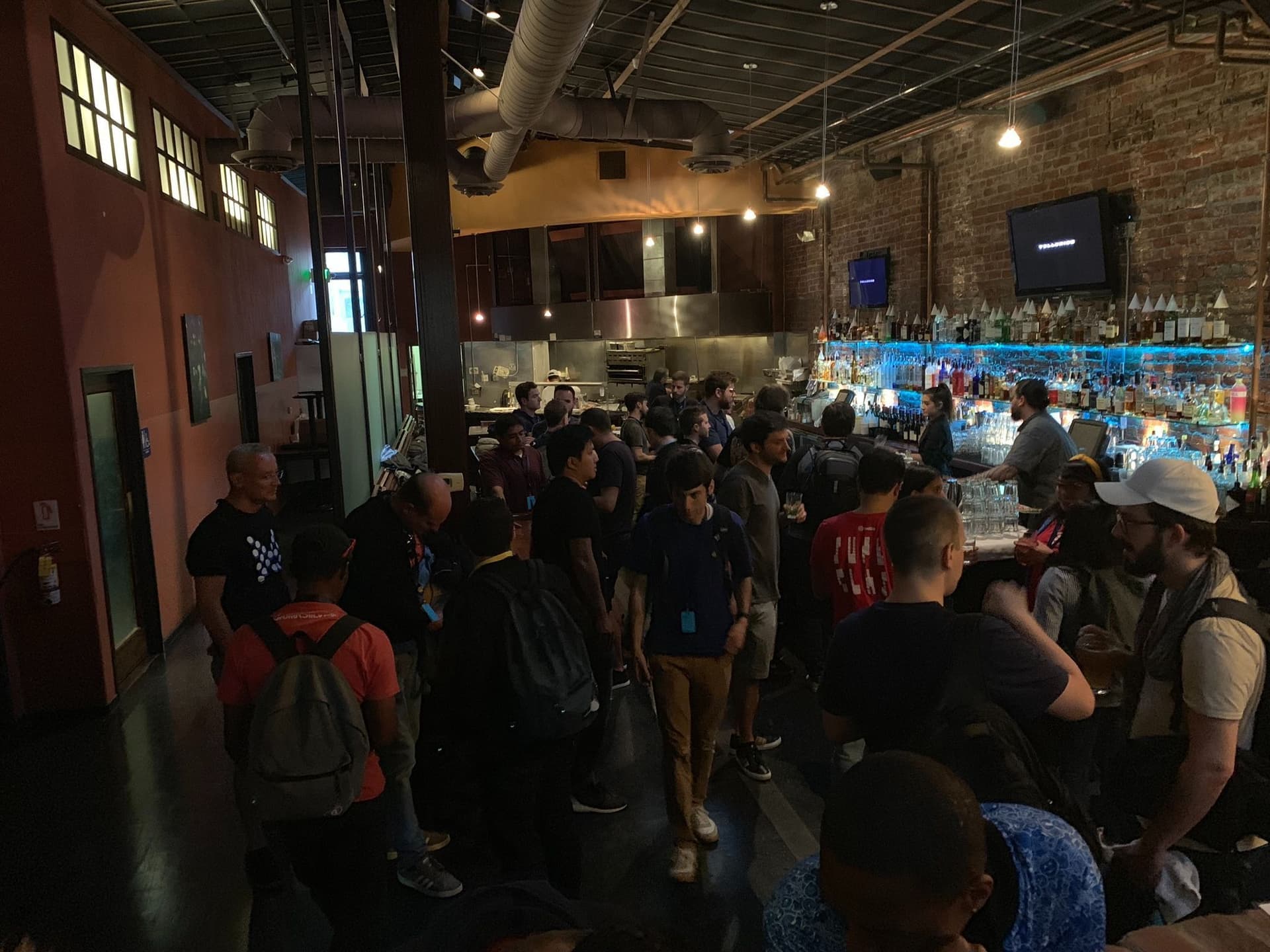
Since the move to Cupertino, it's the Duke of Edinburgh — the only real bar in the area — that plays that role, with BJ's, Eureka, and Lazy Dog for dinners.
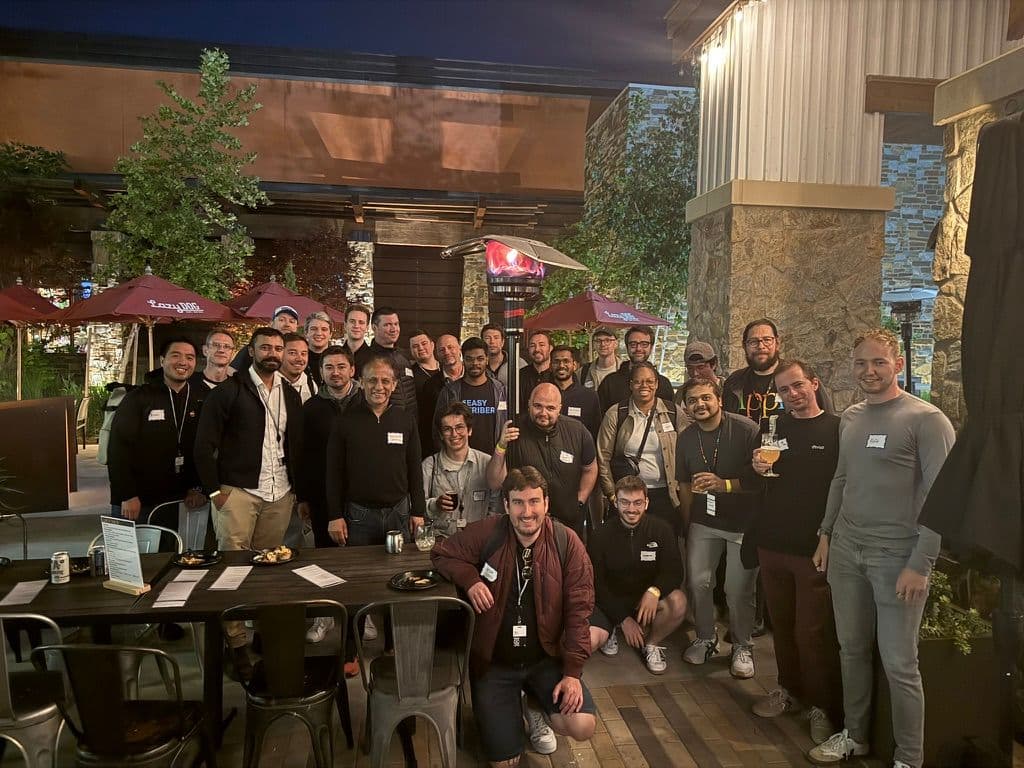
The party I organized for 11Labs, Cloudflare and Clever.cloud last year
The addresses change. The conversations don't: they invariably drift toward SwiftUI, the latest Xcode changes, or whatever Apple announced that morning.
There are happy hours and informal dinners — organized by developer tool vendors (hi Antoine), local communities. Some are open to anyone, some by invitation. The level of conversation tends to be remarkably high because the entry filter is natural: everyone there made the effort to show up.
There are satellite conferences that grew precisely to accommodate those who couldn't get into WWDC itself. AltConf was the most iconic example for years — a free conference organized in parallel, with community speakers, streaming Apple sessions live and running its own talks. It stopped existing in its original form once WWDC became free online, but the spirit it embodied — making the week accessible to everyone, creating a meeting space outside Apple's walls — survived in other forms. Last year, OneMoreThing and CommunityKit shared the spotlight. This year, CommunityKit appears to be the sole survivor — one to watch.
There are also more specialized events: meetups around specific frameworks (visionOS), tech podcaster gatherings (Daring Fireball), evenings organized by national communities — French, German, British developers finding each other before mixing with the rest of the world.
The francophone dinner — which I'm organizing for the fourth time, taking the baton from Michel — brings together French and French-speaking developers present in Cupertino for the week.
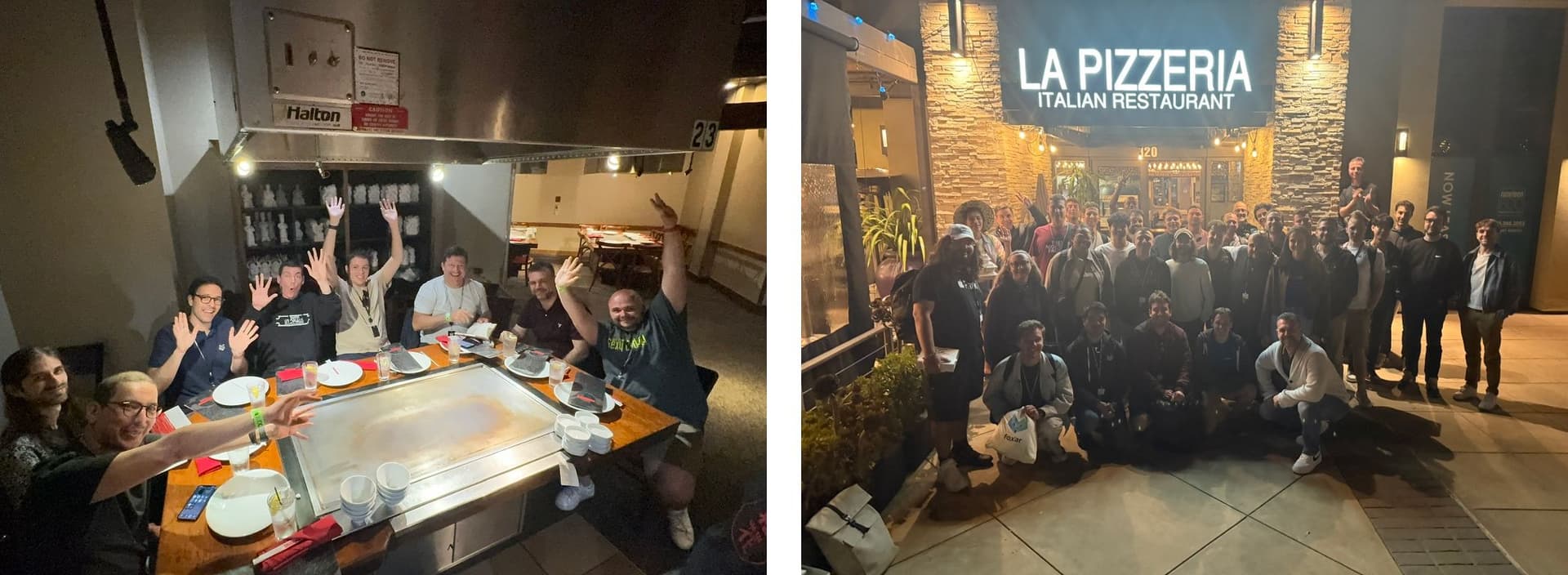
A WWDC Run, for those who'd rather start the day in trail shoes than with a coffee. And an AI evening, because it would have felt like a missed opportunity not to, this year of all years, is on track for the 3rd year.
Three events, three different ways to connect. And in all three cases, the most interesting conversations arrive when you're not expecting them.
And then there are the pins.
The pins: a tradition that says something about the community
I'll talk about my own project here, because it illustrates something important about what the WWDC community actually is.
Since 2021, I've been running Kickstarter campaigns for enamel pins around WWDC — small objects that celebrate the Apple developer ecosystem: references to Swift, to significant features, to moments in the year that mattered to those who were paying attention.
This year's 2026 edition brings together 22 (!) pins, partly available on Kickstarter, partly at the meetups: Swift 6, Apple Intelligence, Apple's 50th anniversary, and an insider reference that will immediately land for anyone who follows the ecosystem closely.
There's a Collector tier limited to 60 copies, and a collaborative pin with Baptiste around his 9:41 app. The campaign ends in 14 days.
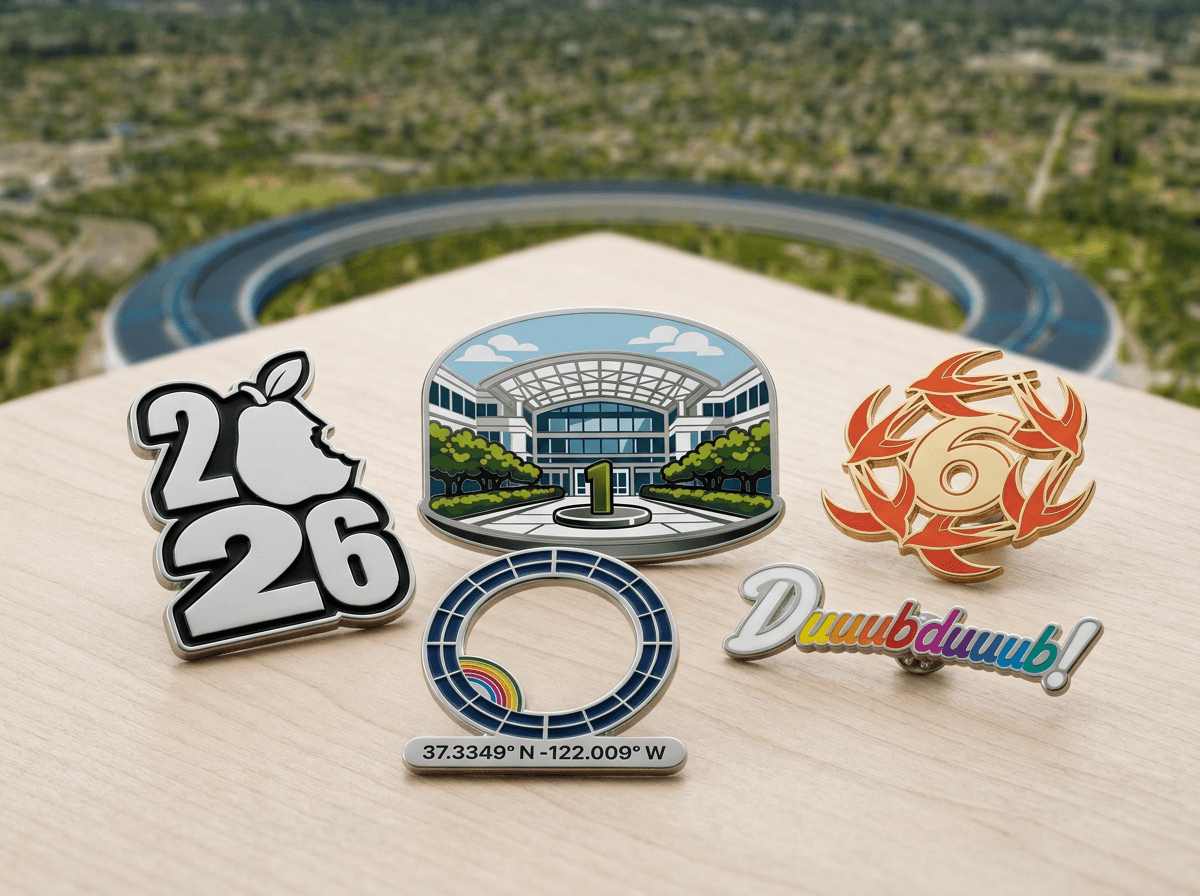
What strikes me every edition is the geography of the backers. Developers from Tokyo, Berlin, São Paulo, Melbourne. People who don't know each other, who may have never set foot in Cupertino, but who share enough common history with this ecosystem to want an object that embodies it. That's what a community is — not a hashtag, not a newsletter, not a Slack server. A fabric of relationships and shared references that crosses time zones.
What in-person gives that streaming doesn't
I've lived through all three formats.
The "shotgun" era first.
You'd connect on opening day and pay immediately. 2 hours to sell out in 2011. 5 minutes in 2012. 72 seconds in 2013 — yes, 72 seconds. That progression says everything about how fast the ecosystem exploded.
Then the paid lottery (2014 to 2019).
You applied, hoped to be selected, and if you were lucky enough to get picked, you paid $1,599.
This might be the only time of year you're happy to see Apple - $1,599 in your bank records
Since 2022, the free lottery.
We apply (again), we hope… and if we’re selected, we get a nice email. Otherwise, it’s more like: ‘Thanks, but sorry—you’re not coming. But hey, you’ve got internet, buddy!’ — though the content is available to everyone online anyway.
Three formats, three different relationships with the conference. But in all three, the same thing that can't be bought.
The content — sessions, keynotes, State of the Union — is perfectly accessible online. In some ways it's even more comfortable: you can pause, rewind, watch at 1.5x. You don't miss any detail. The democratization of WWDC content since 2020 is genuinely good news for the ecosystem.
What streaming can't replicate is the density of possible conversations in one place, over a short period of time. When you're in Cupertino or San José during WWDC week, you're surrounded by people with exactly the same context as you. Everyone watched the keynote that morning. Everyone has an opinion on what Apple just announced. Everyone has questions about the new APIs. Conversations start in the middle — without the usual five minutes of context-setting.
This is what I call the summer boost. Every year, I come back from WWDC week with a particular energy — new ideas, perspectives I didn't have before, connections that will turn into collaborations or friendships. Beta season starts in June, final releases arrive in September — it's an intense cycle, and WWDC is the emotional starting point as much as the technical one.
The French-speaking community
A word about the French and francophone community, because it genuinely exists and is often invisible from the outside.
There's a remarkable density of high-level iOS and macOS developers in France and French-speaking countries — independents, agencies, product teams in companies of all sizes. Many end up at WWDC, officially or not.
And that week is often the occasion to finally put faces to Twitter/X handles, to have dinner with people you've been following for years, to realize the community is larger and more solid than it looks from your desk.
The meeting with Yann in 2012 wasn't an accident. It was the product of an ecosystem where French-speaking developers naturally find each other — at the same events, in the same conversations, in the same informal spaces. Twelve years later, that fabric is still there, and it's grown richer.
How to participate in side events in 2026
The good news: you don't need to be selected for the official in-person component to benefit from the week.
Community events are mostly open to the public, free, or inexpensive, and are announced on channels that are fairly easy to find if you know where to look. The dubdub.community site, which I’ve been maintaining since 2016, lists most of the week’s events—and since last year, directly on Apple’s website (and a shout-out to the WWDR Community team, including Christa, Cat, and Ricardo)—it’s a great place to start. The Slack and Discord communities focused on Apple development (iOSDevHappyHour, the Swift-themed servers) also announce their events a few weeks in advance, and Paul’s repo lists other events.
If you can't be in Cupertino physically, some events offer hybrid formats, and local watch parties happen in cities around the world. The iOS Paris community, for example, regularly gathers around the keynote. It's not the same as being there — but it's infinitely better than watching alone in front of your screen.
Why it matters
There's something I've learned from being part of this ecosystem since 2008: developer careers are built as much in conference hallways as in code editors. Collaborations are born from improvised dinners. Opportunities come from conversations you didn't plan. The ideas you'll implement this summer will sometimes emerge from a ten-minute exchange with someone you just met.
This isn't networking in the transactional sense. It's something more organic — a community of people who share a common obsession with an ecosystem, who find themselves in the same place once a year to talk about it, challenge each other, inspire each other.
The official WWDC ends on Friday. The boost lasts all summer.
What's next
The third article in this series takes on the question independent developers and product teams ask me most often: is it really worth it, strategically? When you invest in WWDC — in time, money, attention — does it translate into a real competitive advantage? And how do you get the most out of it, whether you're solo or on a team of ten?
Want to follow everything from WWDC 2026? Subscribe to my newsletter — I've been covering the conference since 2011, from the perspective of an independent developer. And if the pins interest you,the 2026 Kickstarter campaign ends in 10 days