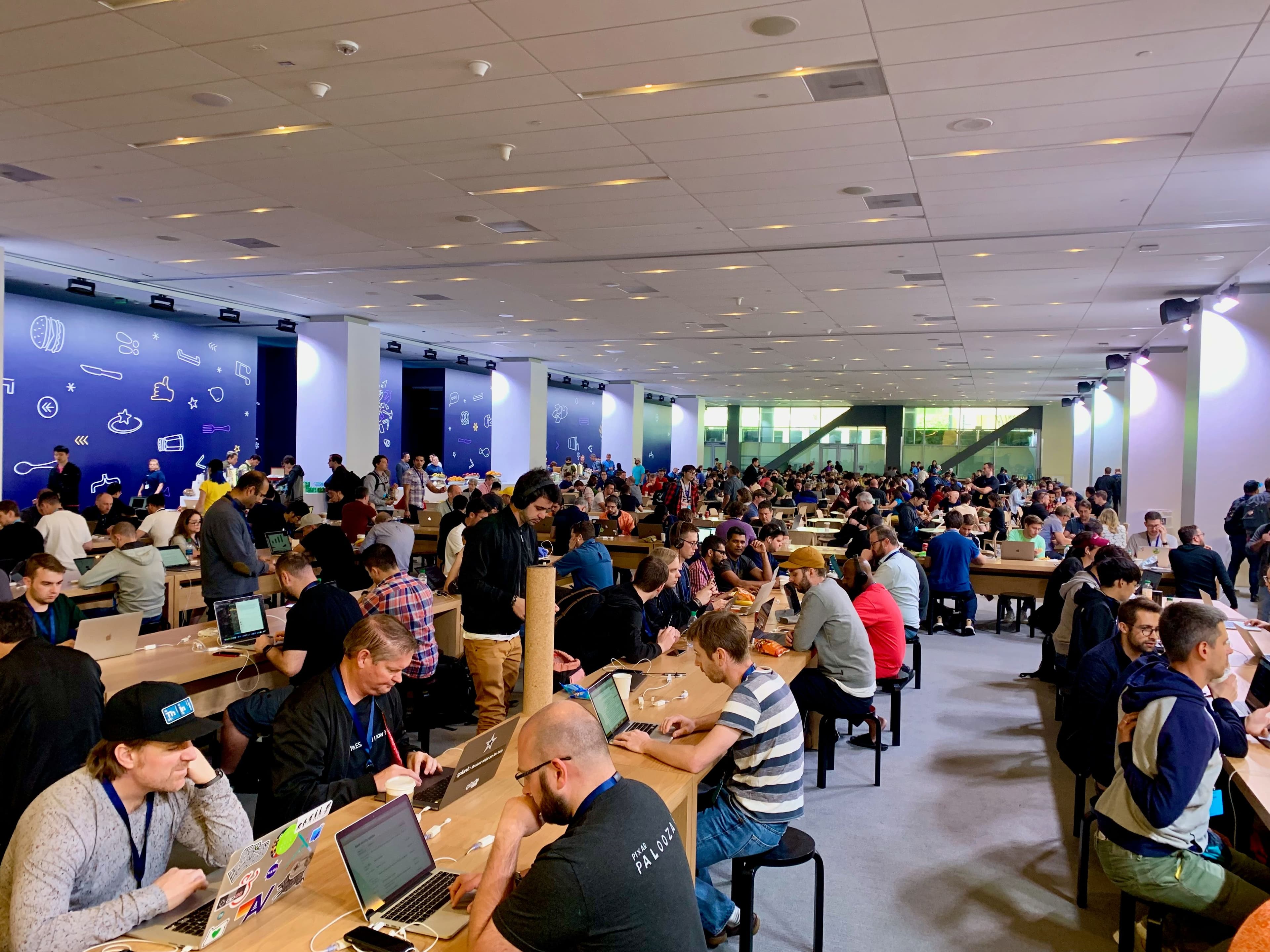
WWDC costs time, money, and a week out of the office. Is it really justified on a business level? After 15 years of attending and advising teams, here's what I actually think — straight.
Is WWDC a strategic investment?
In 2016, I had an Apple Pay web bug that had been blocking me for weeks. Impossible to reproduce reliably, documentation thin, forums useless. Every hour spent debugging was a billable hour lost, a delivery delayed, a client growing impatient.
I submitted the problem in a WWDC lab. Forty-five seconds. The engineer pointed directly to the cause — an undocumented SDK behavior that nobody outside Apple could have known.
Weeks of being blocked. Forty-five seconds.
That's the real question to ask about WWDC. Not "are the sessions worth the trip" — they've been free online for years, we've established that. But how much does it cost you, in time, in money, in missed opportunities, to not have access to that level of information at the right moment?
And how many times a year are you blocked on a problem whose answer exists — somewhere, at Apple — and nowhere else?
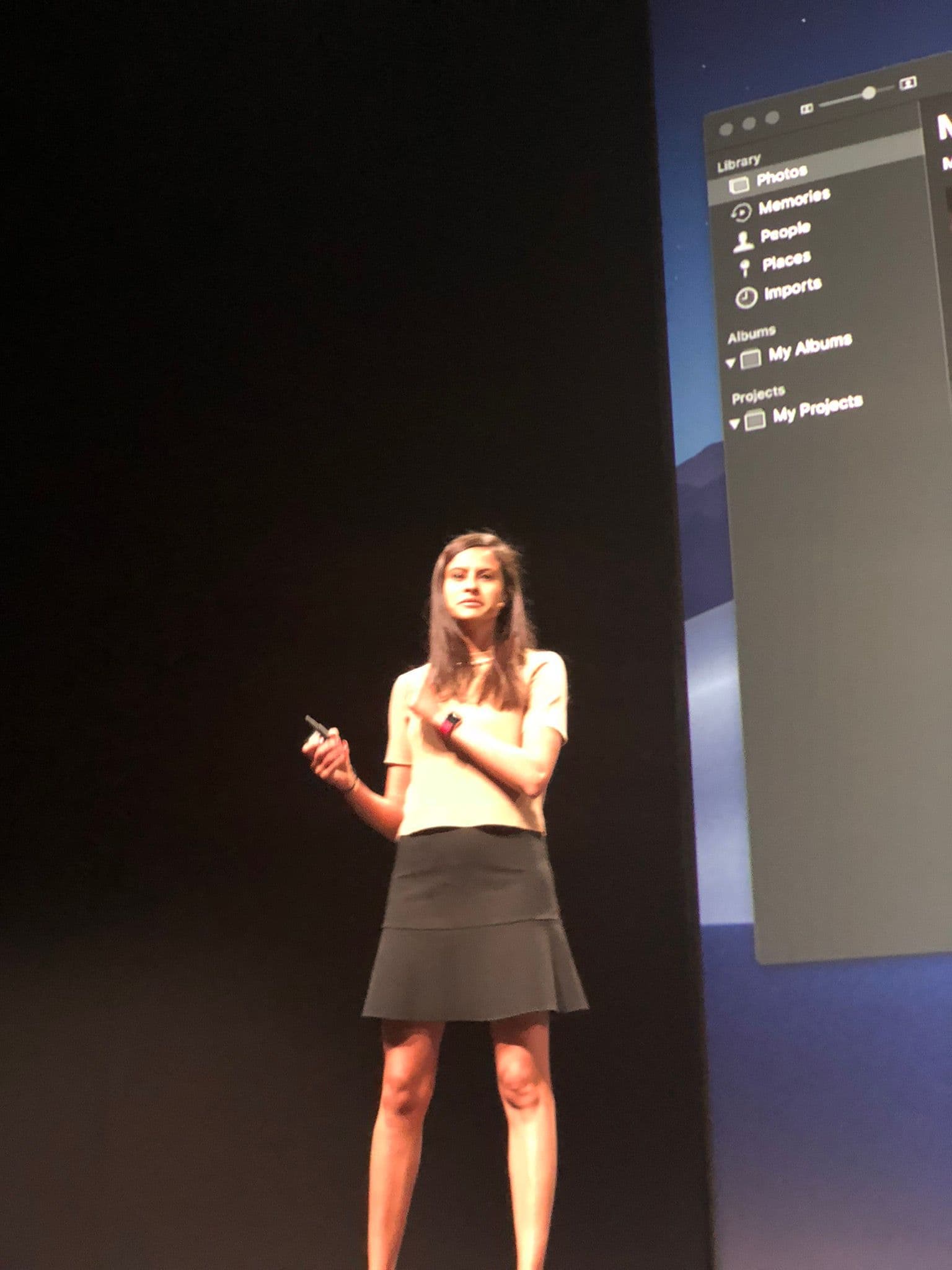
Since 2016, I’ve rarely attended the sessions; I handpicked the ones to go to based on my current projects, unless friends are presenting. Here is Sanaa, who was part of the Photos team at the time.
June, not September
Every June, Apple reshuffles the cards in its ecosystem. New APIs, deprecated frameworks, shifting paradigms. Some changes are spectacular — SwiftUI in 2019, Apple Intelligence in 2024. Others are quieter but just as consequential: a behavioral change in notifications, a new constraint on extensions, a deprecation that will force a partial rewrite within eighteen months.
Those who understand these changes in June — on keynote day, in Tuesday sessions, in hallway conversations with Apple engineers — have three months' head start over those who'll read the official documentation in September when public releases ship.
Three months to prototype before the competition knows it's possible.
Three months to identify what's going to break in the existing codebase before it breaks in production, in front of users, at the worst possible moment.
Three months to adapt the architecture while others still have their heads down in their summer sprints.
I've seen teams miss entire windows because they discovered a critical change in October, right when they were trying to submit an update. They had built a whole feature on an API assumption that changed in June — and nobody had told them.
I've worked with others who were ready on day one of public releases because they'd prototyped in July, adapted in August, and tested in September. The gap between the two is often one week in June.
This isn't passive industry monitoring. It's a structural competitive advantage — the kind you can't buy with a newsletter subscription.
What labs give you that no document does
The 2016 Apple Pay bug is one case among many. The principle is always the same.
Twenty, thirty minutes with an Apple engineer who wrote the code — not someone who read the docs, someone who wrote the code — is a resource that exists nowhere else on earth. Not on Stack Overflow, and certainly not on ChatGPT. Not in the release notes. Not in the Apple Developer forums. Nowhere.
You arrive with a specific problem. An architectural constraint you can't figure out how to work around. A question about the intent behind an API whose behavior escapes you. An intermittent crash you can't reproduce but that keeps showing up in your crash reports. And you leave with a direct answer, often in minutes, sometimes with a name if you need to follow up — and sometimes with confirmation that what you thought was impossible isn't, that the limitation you've been working around for six months is going away in the next version.
Remote labs have existed since COVID and have real value, particularly for well-prepared, specific questions. But in-person, the conversation overflows naturally. The engineer shows you something on their screen. They mention an adjacent case you hadn't thought to bring up. You leave with things you wouldn't have known to ask for because you didn't know they existed. That's a difference in kind, not degree.
The golden rule: come with specific questions.
Labs aren't brainstorming sessions (except perhaps the much sought-after UI/UX Labs). They're surgical consultations. Those who get the most out of them are those who arrive with a well-formulated problem and clear context. Those who arrive vaguely hoping for inspiration usually leave disappointed.
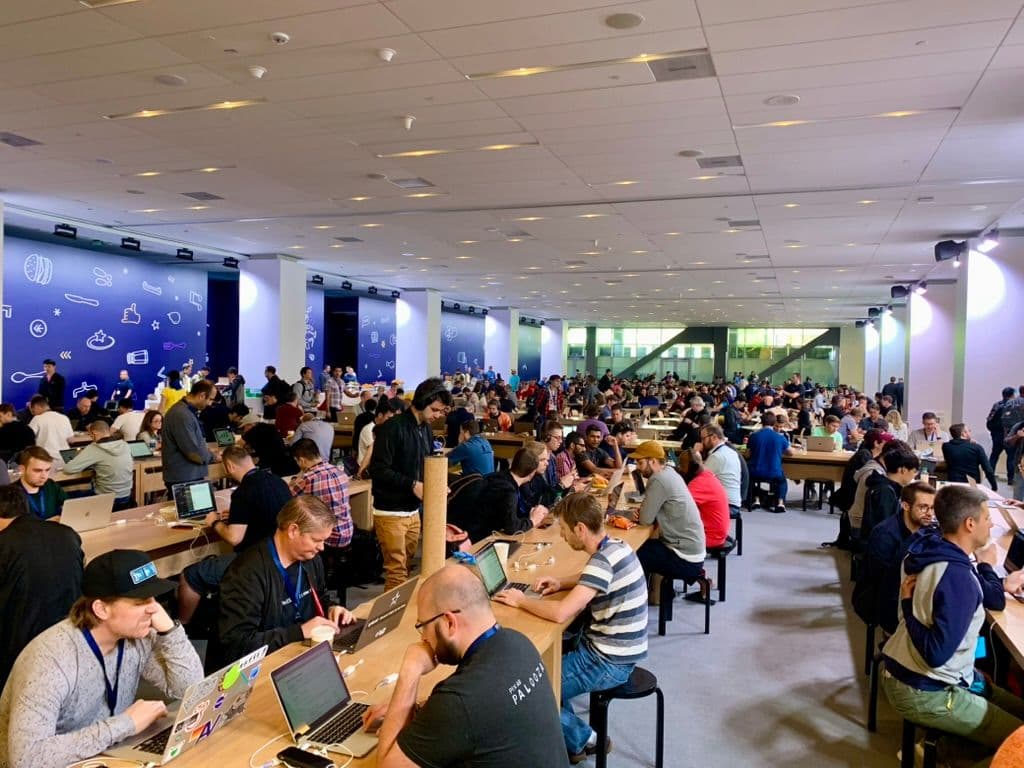
Download Station at WWDC19
Reputation builds where people are watching
For a startup or agency recruiting serious iOS developers, WWDC is one of the rare places in the world where reputation builds in front of the people who matter.
The best Apple developers — the ones you want in your team — aren't looking for jobs on LinkedIn. They build their network within the ecosystem, and they know perfectly well who's who. Which teams make the effort to show up every year. Which ones organize side events, contribute to open source projects, share their learnings in sessions or blog posts. Which ones are there consistently and not just when it's convenient.
That presence doesn't convert into recruitment the same week — that's not what WWDC is for. But it accumulates over multiple editions, and it carries real weight when a talented developer is choosing between an offer from you and an offer from someone else. "I know them, I've crossed paths with them in Cupertino, they're serious" — that kind of informal signal moves decisions that no HR process can influence.
For an independent developer, it's even more direct. The network you build at WWDC isn't a LinkedIn network of connections you never call. It's a fabric of relationships with people who share the same level of standards, the same technical references, the same obsession with a demanding ecosystem. The most interesting engagements I've worked on started with conversations that weren't planned — in a hallway at the McEnery Convention Center, over dinner in San José... No agenda, no pitch, just two developers talking about what they're building.
The argument nobody thinks to use
Being at WWDC is a positioning signal that few developers think to leverage explicitly with clients — and yet it's one of the most powerful ones available.
Here's what it changes in practice. When you're advising a client on an architecture decision and you can say "I had confirmation in a lab that this API is changing direction next year, here's what I learned," you're no longer just another technical vendor doing blog-based industry research. You're someone with access to information their internal team doesn't have — and that their other vendors probably don't have either.
This is particularly valuable for architecture decisions that span multiple years. A CTO who needs to choose between two approaches for an app that will be in production in 2027 needs someone who knows where Apple is going — not just where Apple was at the last WWDC they watched in replay. The difference between advice based on public documentation and advice based on a direct conversation with the engineers evolving the platform is exactly the difference between a vendor and a partner.
And that translates into value. Not by putting "WWDC attendee" on your website — but by being the person people think of when an important technical decision needs to be made.
The real math
Let's put the numbers on the table. A WWDC week for a European developer: Paris–San Francisco return flight (€700 with FrenchBee — to €5,000 in Business on Air France — depending on when you book), hotel in Cupertino (€1,300 to €1,700 for the week — hotels near Apple Park are limited and get booked fast), daily expenses. Plus a week of potential billable time paused. All in: between €3,500 and €5,000 depending on conditions.
That's significant. Here's how it justifies itself, by profile.
For an independent: the question isn't "can I afford it" but "what's the return over the next five years." A single engagement sourced from the week's connections — and it happens, regularly, for those who prepare their week properly — covers the trip and usually well beyond. The network built over multiple editions is a professional asset that appreciates over time, not a one-off expense to write off.
For a product team: the math is different but equally favorable. Sending one or two developers to WWDC means buying three months' lead on the competition, avoiding the costly migration bugs that inevitably hit in October for those who didn't follow the betas from June, and coming back with an understanding of Apple's roadmap that no public document provides. Compared to the cost of a month of development wasted on a wrong API assumption — and I've seen wrong API assumptions, plenty of them — the WWDC budget is a no-brainer.
For a startup: it's also a signal sent outward. The best iOS teams in the market — the ones you want to hire, the ones you want to collaborate with, the ones who will recommend your services — know who goes to WWDC and who doesn't. It's not said explicitly, but it's an indicator of seriousness toward the ecosystem that people observe and factor in.
What I tell clients consistently when the question comes up: WWDC doesn't justify itself as training with a measurable three-month ROI. It justifies itself as an investment in network, strategic intelligence, and positioning — with a minimum two to three-year horizon. Those who go once to "see what it's like" get less out of it than those who go regularly and build their presence in the ecosystem over time.
An unprepared week returns almost nothing
This needs to be said clearly, because it's a trap many teams fall into the first time.
I've seen teams attend WWDC every year and come back with little that's concrete. Not because the conference wasn't valuable — but because they had no specific questions to solve, no technical problems prepared for the labs, no clear intention for the week. They watched sessions they could have watched from their desks, drank beers at the Duke of Edinburgh, and came home with a nice memory and an expense report.
Effective WWDC preparation starts weeks before departure. Sessions to prioritize — because there are dozens running in parallel and you can't see everything. Labs to book the first morning the moment registration opens, because the most in-demand slots go in minutes. Community events to identify in advance, because the best evenings aren't necessarily the loudest ones. And a list of specific questions and problems to solve during the week — the kind of list you build as a team before leaving.
A well-prepared WWDC week is one of the most professionally dense and productive weeks of the year. An improvised one is expensive tech tourism with good California weather as a bonus.
The question you should actually be asking
Not "is WWDC worth going to?" That question is poorly framed.
The right question is: what technical decision did you make this year based on an assumption that turned out to be wrong at the iOS release? How many days of development did that mistake cost you? How many times were you blocked on a bug whose answer existed — somewhere, in a WWDC lab you weren't in?
Because that's the real cost of not going. Not the plane ticket you didn't buy. The weeks lost on problems that had a direct solution. The features delivered three months late on what was possible. The architecture decisions made in the fog when clarity existed, 9,000 kilometers away, for those who made the effort to be there.
You want an incredible app — not average, not "gets the job done," but the one that tops the App Store charts because it uses Apple's latest standards the moment they're revealed, built by someone who understands the ecosystem down to its finest details? Get in touch.
I work with ambitious entrepreneurs and talented teams to build iOS and macOS apps that matter — since 2011, since WWDC. Reach out directly.